Thursday, 17 February 2022

Paperback's Pondering's: How Do You Read Comics/Graphic Novels?


In the spirit of my superhero course and all the graphic novels and comics I have been reading recently, I wanted to talk a bit about my reading practices. Something that I've observed when I read comics or graphic novels is that I always pay attention to the text first, as opposed to art. I find this detail interesting, because the main component of graphic fiction is that there are graphics attached to the text. If anything, the text is not intended to be the focal point of where your eye goes, as the art is much bigger, much brighter, and would typically catch someone's attention. So I wonder, why is it that when I read graphic fiction, my eyes immediately go to the text? Why is it that sometimes, I forget that there's art at all? 

I want to make clear that I love graphic fiction dearly. I read graphic fiction because I find that it's really easy for me to absorb and be entertained by, and usually I pick graphic fiction that aligns with my interests such as Marvel or Buffy the Vampire Slayer. So, just because I don't tend to focus on the graphics, doesn't mean that I hate the genre. I think it just means that I read the genre in a different way than other people might. I can't exactly say why my eye immediately goes to the speech bubbles before the art, other then maybe conclude that it has to do with what I'm used to. I only got into graphic fiction within the past couple of years, but I've loved fiction books for years. So perhaps, I gravitate towards the words in a graphic novel because I was trained to look at words before I look at pictures. Or, perhaps this all says something more about learning practices. 

I was telling a seminar that I teach that when they plan out their essays for the course, they should use whatever methods they learn best in to help them. So if they're a visual learner, they should draw out a mind map. If they're an oral learner, they should speak their essay out loud and record themselves. If they learn best by reading, they should just start writing. I align myself most with reading, as sometimes graphics don't allow me to grasp what I'm supposed to understand, and orality doesn't engage me. So I wonder if the way I learn best has allowed for me to almost gloss over the graphics in a comic book and instead trust the text to tell me all that I need to know about the story, because I'm confident that the text will carry me through. Now, this isn't always the case, as graphic fiction relies heavily on the graphics. Since the text is not really the focal point of the comic, there isn't always enough description in the text to build the world of the story. The pictures do crucial work in establishing setting, that the text cannot always do. However, no matter what, I will always see the text first. It's just an odd way of how my brain works. 

Usually how I read graphic fiction is by reading all of the text, and then going back and looking at the pictures. I know that may sound really odd, but nothing about how I read makes sense to me either. But either way, I do think this opens up an interesting conversation about learning methods and how people practice the great art of reading. However you read graphic fiction, it is a valuable genre, and I'd love to know more about how you approach it. 

How do you read graphic fiction? What kind of learner are you? 

Emily @ Paperback Princess 

Thursday, 10 February 2022

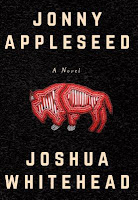
Jonny Appleseed by: Joshua Whitehead

Genre: Fiction, LGBT 

Published: May 15, 2018 by: Arsenal Pulp Press

Pages: 224 

Rating: 5/5 stars 


CW: references to residential schools and inter-generational trauma, addiction, homophobia, fetishization of Indigenous people, abuse 

While on the way to his stepfather's funeral, Jonny Appleseed, a Two-Spirit and Indigiqueer young adult recounts his childhood and all that led him to where he is today. Jonny flashes back to when he first realized he was gay, his first love, and a life influenced by inter-generational trauma that has led him to fetishize himself on dating websites in order to make money. Jonny left the reservation for the big city, but his return will bring back past memories and reignite the respect he has for his beloved grandmother, his kokum. 

I've had to read this book a couple of times: once for pleasure and the other time for school. I found that when I had to read the book for school and I was able to talk through my feelings of the book with other students, it resonated with me even more. Reading from Indigenous queer authors, or Indigiqueer authors as Whitehead puts it, isn't something that I always dive into. However, Jonny's story touches on so many topics that I couldn't help but find some sort of connection to it. It was an emotional coming of age story, and I can see myself recommending this book for years to come. 

To start, the plot in and of itself is quite simple. The book takes place on Jonny's journey back to the reservation, and this is a time of self reflection for him as he recounts what his childhood was like. There isn't much present action that takes place, as the book has a significant amount of flashbacks. But in Jonny's flashbacks, his present self becomes all the more clear to the reader. Whitehead does a really cool thing where he uses Jonny's past to talk about Jonny's present, and the transition of time is made really clear in how Jonny's relationship with his friends and family changes. 

Something that Whitehead talks a lot about in interviews is how Jonny as a character can be reflected through his own life experiences. While the book is by no means autobiographical, Whitehead's own identity of an Indigiqueer person is certainly influenced in Jonny's way of life. Own voices novels are so important, especially when themes of coming of age are so prevalent. I couldn't help but see the authenticity of Jonny's life experiences and how Whitehead took care to share an important, emotional and authentic story. 

This book doesn't have a main action take place, or a main problem that the main character has to solve. However, it becomes clear to the reader that Jonny is at a transformative moment in his life, in which he needs to reflect on the person he has become and who he wants to be. A lot of the topics in this book are hard, because they hit on inter-generational trauma that many Indigenous teens and young adults know too well. Jonny's quest to simply survive has impacted how he feels about his own Indigenous identity. It's not an easy read despite the book being easy to follow in structure, so please do take care to read the content warnings. However, I think this book is a staple for those who want to read more books by queer authors, and especially those who want to see how gender and sexuality is explored in Indigenous communities. 

Have you read Jonny Appleseed? What did you think? 

Emily @ Paperback Princess


Wednesday, 2 February 2022

Month in Review: January


Now that I've returned to blogging after a hiatus, it is also now time to return to monthly wrap-ups! I really missed these posts, so here's what I got up to in January, and how my 2022 is shaping up to be: 

What I Read: 

I've set my Goodreads goal for 100 books, which I'm fairly confident I'll make judging by my reading list for school and the types of books I'll be reading. I'm already on track, and some of the books I read in January include: 

Monstress: Volume 1 by: Marjorie Liu and Sana Takeda: 2/5 stars 

Moon-Girl and Devil Dinosaur by: Amy Reeder, Brandon Montclare and Natacha Bustos: 5/5 stars 

Our Violent Ends by: Chloe Gong: 5/5 stars 

Cyclopedia Exotica by: Arminder Dhaliwal: 4/5 stars 

Squad by: Maggie Tokuda-Hall and Lisa Sterle: 5/5 stars 

Fall On Your Knees by: Ann-Marie MacDonald: 3/5 stars 

Favourite Book of the Month: You may be able to tell that I read a heavy assortment of graphic novels this month. This is partly why I'm able to keep on track of my goal. Graphic novels are faster for me to get through and I've been absolutely loving them. Some of these books I had to read for a superhero course I'm in, and some were just for fun. But my favourite has to be Moon-Girl and Devil Dinosaur. I got it as a Christmas present and it is such a fun series. It's diverse, heart-warming, and has some great cameos from other Marvel superheroes. 

What I Blogged: 

Like I said, I've returned to blogging weekly and my new routine is shaping up very well. I'm hoping that I won't have to stop any time soon because I really did miss it. My favourite post of the month would have to be when I wrote about Buffy the Vampire Slayer, Angel, and Abuses of Power. There are content warnings attached to this post, but it felt great to get out my frustrations towards the creator of one of my favourite tv shows. 

Some of My Favourite Blog Posts of the Month: 

Cee talks about censorship in Of Monsters, Mice and Men 

Roberta shares Her Most Fulfilling Author/Blogger Interactions 

Claire says that 2022 is Ours 

Sabrina is Reading Outside Her Comfort Zone 

Life Stuff: 

It's a new term, and I've got an easier course load than last term, which is good. As I mentioned before, I'm taking a superhero course, which has definitely fueled my graphic novel collection. I'm hopeful that this term will bring about some new reading favourites, but of course, I also expect things to get busy as we near the end. 

Other than school stuff, I'm really looking forward to the Olympics this month! Today is the opening ceremony, and I've been waiting so patiently for things to kick off. My family are very much into the Olympics, and I am extremely passionate about snowboarding in particular. I'll be cheering on Canada and hoping that everyone has a safe and successful time in Beijing! 

That was my January. How was yours? 

Emily @ Paperback Princess

Wednesday, 26 January 2022

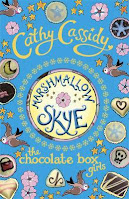
Marshmallow Skye (The Chocolate Box Girls #2) by: Cathy Cassidy

 Genre: Middle-grade fiction 

Published: September 1, 2011 by Puffin Books 

Pages: 304 

Rating: 4/5 stars 

CW: parental divorce, grief, use of slur to refer to Romani travelers 


Skye and her twin sister Summer have always been inseparable. However, while Summer has flourished in her talent for ballet, Skye has recently been feeling left out, and she struggles to fit in while her sister takes on new opportunities. While feeling isolated, Skye stumbles upon an old chest full of vintage treasures, and soon she begins to find a connection with an old ancestor. While Skye fills her head with stories of a past time, she begins to move further away from her sister, and the two girls must find a way to reconcile their differences despite wanting to forge their own paths. 

This is the second book in the Chocolate Box Girls series by Cathy Cassidy, which I really took an interest to after seeing it recommended on Booktube. I just love light-hearted middle-grade novels, they can be the most perfect form of escapism. Since this series is native to the UK, I wasn't sure if I would ever be able to get my hands on the rest of the books in the series. However, I was able to find them for a reasonable price on Amazon, and now I'll be able to enjoy the rest of the books, which I'm thrilled about. While Marshmallow Skye didn't completely win me over like the first book, it was still a good sequel and encouraged me to continue on with the series. 

I really appreciated how Cassidy gives Skye and Summer different interests despite them being twins. Being a twin myself, I think the common trope is to make twins mirrors of each other, both in looks and in personality. However, while Summer is extroverted and opinionated, Skye is quieter and more laid-back, and I think the dynamic between the two sisters was well developed. I could definitely relate to their fears of drifting apart, and I think Cassidy did a good job at capturing an age-appropriate representation of the struggles with finding your own interests against your best friend. 

I liked how Skye took up an interest in vintage things, as her interest was unique to her and I had a good time seeing how she processes the different treasures that she finds. Once again the book is set in Dorset, England, and Skye's fascination with history mixed with the setting blended well together. I think the atmosphere, like the first book, was overall very cozy and a big reason as to why I enjoy these books in the first place. They're just easy to get through, calming, and every book is filled with some significant descriptions of chocolate, as Skye's step father runs a chocolate business. 

Now something that I didn't really enjoy in this book is the overuse of the g-slur to refer to Romani travelers. A lot of Skye's fascination with history stems from this exoticized viewpoint of Romani's, which I think got a little bit out of hand. It went to the point where I could definitely see almost an objectification of Romani people, and I think Skye was very much given a white gaze, where she looked onto Romani people with a fascination that stems from exoticizing a group of people due to their skin colour. I completely understand that this book was written in the early 2010's, when the standards for acceptable language was different. Still today people are just starting to learn about the problems with the g-slur, as it is very commonly used in colloquial language to refer to Romani people. However, I do think Skye's interest in Romani people could have been handled better, and as a middle-grade book, it could have become a teaching moment for kids to learn about a culture unfamiliar to them. I still quite enjoyed the book, but these problems were striking enough that I did take notice. 

Overall, I think Marshmallow Skye delivered on giving the cozy, comforting tone that I expect out of The Chocolate Box Girls series. I am looking forward to reading the rest of the series. While I do think the book has some issues that can be chalked up to the time period it was published, it was a satisfying sequel. Just do be aware going into the book of its issues, as reading a book in 2022, we can always do better to point out issues. 

Have you read Marshmallow Skye? What did you think? 

Emily @ Paperback Princess

Wednesday, 19 January 2022

Paperback's Pondering's: On Buffy the Vampire Slayer, Angel, and Abuses of Power


CW: this post will discuss the various abuses committed by Joss Whedon, as well as addiction issues, and will also include major spoilers from Buffy the Vampire Slayer and Angel. 

I mentioned in my life update from two weeks ago that I am currently back on a Buffy the Vampire Slayer kick. Right now I'm watching Angel, the spin-off series about Buffy's former vampire love interest who makes his way to Los Angeles to help victims of magical crimes. Angel teams up with Cordelia, the "mean-girl," from Buffy, and the two go through some amazing character development, with Angel redeeming himself from years of past crimes, and Cordelia becoming a more empathetic and independent individual. Cordelia, played by Charisma Carpenter, easily became one of my favourite characters from the Buffy-verse. That's why the downfall of her character, and the reasoning behind the downfall, really upset me. 

*Spoilers for Angel and mentions of abuse ahead* 

Last year, actor Ray Fisher came forward with allegations against Joss Whedon for creating a toxic work environment on the set of Justice League. I'm not familiar with Whedon's work in the DC universe, so for the most of this post, I will be focusing on his work in the Buffy-verse. However, it's crucial that we also remember the bravery of Fisher and other actors for standing up to Whedon. After Fisher came forward, Charisma Carpenter posted that Whedon verbally abused her on the set of Angel, especially after she told him she was pregnant before filming the fourth season. The result, was that Whedon killed Carpenter's character off in season four, by giving her a huge downfall in which she commits some heinous acts, all while under the extremely under-developed guise that she was possessed by another being. All of the growth that Cordelia went through is un-done, all because Joss Whedon decided to take it out on Carpenter. When I first got into Buffy, I was still in high-school, so I didn't know of these allegations. It's only been recently during my re-watch that I've come to recognize why Whedon made the writing decisions that he did, and it has made it extremely difficult for me to reconcile my love for all things Buffy, with the asshole who made it all. 

First and foremost, it is our duty as consumers of media to believe victims when they come forward with allegations of abuse. Recently, Whedon came into the public eye by doing an interview with the Vulture, where he pretty much denies all allegations and chalks a lot of his previous faults down to addiction issues. I'm not going to re-circulate the interview because I think it just gives Whedon more publicity. However, an important thing that I want to point out is how insensitive it is that he admits he has addiction troubles, and yet he uses those troubles to excuse the fact that he is also just a shitty person. Addiction is a mental illness, and people struggling with addiction can commit acts that they will later regret and want to take back. There is always room for people with addiction to heal, and to work towards redemption. However, Joss Whedon doesn't seek that redemption for himself. Instead he calls his victims names, and makes them sound stupid for even saying their piece in the first place. He makes people with addictions all sound like monsters, which is not the case. If you are struggling with addiction, you are worthy to heal. Joss Whedon does have an addiction, and he has every right to heal himself from that addiction. However, at the same time, he needs to take accountability for his actions, which he continues to fail to do. 

I love Buffy. I think it is a brilliant show, and its spin-off Angel is also a fascinating exploration on how to redeem oneself from the past. Whedon created some great shows, but I no longer want to give credit to him. Instead, I give credit to the actresses that made these shows great: such as Sarah Michelle Gellar, and Charisma Carpenter. While Whedon has been lifted up as this pillar of feminist tv, we as viewers have forgotten that at his core, he is a misogynist. He has not grasped the concepts of feminism, and the concepts of redemption that his characters represent. All he was concerned about was exploiting the idea of feminism to uplift himself. If Whedon really cared about his female characters, he would've given their actresses more respect. 

I suffer a lot from morality OCD, and a large component of that is me overanalyzing media I consume to make sure that it is completely unproblematic in subject matter and in the people who made it. Recently I've been struggling a lot with wanting to watch Angel, but also not wanting to give Whedon more money. I understand that we cannot do everything perfectly in life, and I can enjoy the show and the work that Carpenter does on the show while also recognizing that Whedon is not a great creator. It is through posts like these when I am able to get my more deeper feelings out, and realize that a show that I really love had a bad person behind it. I can enjoy a show and also recognize its problematic past, the two can exist at the same time. But when I see Whedon get more publicity through a magazine spread, that doesn't sit right with me. I think all of us Buffy fans can continue appreciating the universe for what it is, and the comfort that it brings us, but there is no need for us to honour Joss Whedon just because he created the world. 

I feel as if this post is very much an info-dump of some pent-up feelings I've been having the past couple of weeks in respect to watching Whedon content and struggling with all of the pain he has caused actors who I really appreciate. I'm not quite sure where I'm going with this post, but I guess I'll just leave it at this: Buffy and Angel are great shows because they demonstrated magical beings dealing with human issues such as misogyny, crime, and redemption. We can watch these shows and find comfort in the characters. But, I do not ever want to give kudos to Whedon for creating such a world, and I hope that soon he will recognize that his actions will never be forgotten by the fans. 

Do you watch Buffy or Angel? Did you read the Whedon article? What do you think about consuming media that has been created by problematic people? 

Emily @ Paperback Princess

Thursday, 13 January 2022

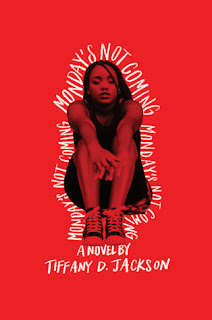
Monday's Not Coming by Tiffany D. Jackson

 Genre: Young Adult Fiction, Thriller, Contemporary 

Published: May 22, 2018 by: Katherine Tegen Books 

Pages: 448 

Rating: 4/5 stars 

CW: child abuse, murder, PTSD, racism 


Claudia and her best friend Monday have always been inseparable, willing to tell one another anything. Until one day, when Monday doesn't show up for school. Claudia knows that it is unlike Monday to leave her best friend without telling her where she went, so she begins to try to put the pieces together as to where Monday is. The problem is, nobody but Claudia seems to be taking Monday's disappearance seriously. The police have no interest in a missing Black child, and Monday's family react defensively to Claudia's questions. All Claudia has are possible clues that Monday has left behind for her, and she is determined to find out where her friend is. 

This book was really quite something. It was shocking and disturbing, while still offering important social commentary on the epidemic of missing Black children and the systemic barriers put in place by the very people who are supposed to protect Black communities. While I did have some trouble with the format of this book, I still overall thought it to be a jarring read that really impacted me. 

Claudia is a fascinating character, and I enjoyed how Jackson wrote and developed both her and Monday. The two come from different economic backgrounds, with Claudia's parents both having stable jobs and high expectations for their daughter, while Monday comes from an abusive household and doesn't really get attention from her mother. Claudia's parents are reluctant to helping their daughter because of their judgements of Monday's background, and I thought these details were needed, because I could imagine such a conversation happening in real life. So often, different communities are labelled as "the bad communities." Parents from middle-class backgrounds are reluctant in having their children associate in these communities. However, this book explored what happens when these stereotyped communities are ignored. It results in children going missing, and parents turning a blind eye. While this story was frustrating in the sense that nobody but Claudia took Monday's disappearance seriously, I thought the reaction from the middle-class people in the story was sadly accurate to a situation that could happen in real life, and Jackson did a great job at showing the consequences that come out of these situations. 

I really liked how this book explored Monday's character even if she was not always present in it. There are flashbacks to Monday, but a lot of Monday's story is told by Claudia and by Monday's own family. I learnt a lot about Monday just by reading about what other people said about her, and this made me want to root for her to come back even more. I ended up reading this book rather quickly, because I wanted to know what had happened to this girl and if she was safe. I ended up rooting for a character who we don't get to see that much in the story, which made the reading more emotional. 

I will say that the main issue I had with the book is the way it is structured. The book follows Monday and Claudia growing up, but also moves forward to the present after Monday has disappeared. The result is that a lot of the chapters use years to explain what timeline we're in, however this made the reading confusing. One chapter could be: "two years before Monday's disappearance," then it goes back into the present, then it goes three years back, and continues. I found it hard to situate myself within a certain timeline and often I just ended up confused as to what time I was in. I would have liked for the book to stay more consistent with one moment in the present, and one moment in the past, in order to be more focused. 

This book is labelled as a thriller, but it is so much more than a mystery in which one is disconnected from the characters. I feel like thrillers are often there to keep the reader entertained, but I wouldn't say that I was entertained in a positive sense by the book. I was certainly concerned, and very disturbed, and I think Jackson did a great job at reinventing the thriller genre so that it still has aspects of a crime that needs to be solved, while still rooting itself within a particular social issue that isn't supposed to be comfortable. Overall, I would recommend this book for folks who can handle its heavy subject matter (see content warnings), because I think it is an important book. 

Have you read Monday's Not Coming? What did you think? 

Emily @ Paperback Princess

Friday, 7 January 2022

Paperback's Pondering's: How Do You Keep Track of New Releases?


Every December I usually get some Indigo gift cards for my birthday and Christmas. (For those of you outside Canada, Indigo is our main bookstore.) Then on the day after Christmas, I go crazy buying books that I wouldn't normally purchase in a physical format. The thing that I've been noticing, especially this year, is that I never actually save my gift cards for when there's a new release out later in the year that I know I will love. I don't even preorder books using the gift cards. Mainly the reason for this is, that I never can keep track of when new releases are coming out. Part of this problem comes from forgetfulness, and part of it is me being impatient and just wanting to spend the gift cards right away. However, I do think I need to come up with a better system of how to keep track of new releases, so I know just when to wait to buy books, and what to wait for. 

I do read fellow book blogger's posts throughout the year, when people share what upcoming releases they're excited for. But I don't think bookmarking these posts and returning back to them would help with my forgetfulness. I would simply forget to check back on the posts. Putting reminders in my phone on new releases doesn't seem practical, as I try to reserve reminders for really important things. I just don't think at the moment I'm that great at marking down throughout the year what books are coming out and why I should wait for them. Mainly I'm appealing to those of you who do make posts documenting releases you're excited for, and I want to know how you get your information and how to remember what to look out for. 

I do often see upcoming releases through author announcements on Twitter, but again, these announcements often go in my one ear, and out the other. For example, I know that author Mark Oshiro is coming out with a new Nico and Will story as a part of Rick Riordan's Percy Jackson universe, and I know that when that book comes out, I would like to be in the loop. However, I can't seem to find a system that'll give me news as soon as it happens. 

I suppose that finding out a new book has been released through blog posts and buzz on Twitter isn't all that bad, as sometimes the surprise of realizing that a book you know you'll love has now been released is a welcome surprise. However, I would love to have this information before I spend all my gift cards on other books, and I just need to find a better way on how to get this information. 

I'm not really sure where I'm going with this post. I think I'm really just looking for some organizational help from fellow book bloggers. What are some simple things I can do to know when new releases are approaching? Are any of you as forgetful as I am? What is your most anticipated new release of 2022? 

Emily @ Paperback Princess